Jul 30, 2026
Why Digitizing Fuel Level Measurement Is a Game-Changer for Refined Fuel Users
It is a fair question. Power windows have been standard for decades, not because hand cranks stopped working, but because we expect more from the technology around us. We expect reliability, comfort, and a little bit of intelligence built in. Yet most propane tanks are still equipped with a piece of technology designed nearly a century ago: the mechanical float gauge. A small dial, a moving arm, a magnet. It works, until it does not.
At Rotarex SRG, we believe the propane industry deserves the same generational upgrade. That is why we developed the ELG, our electronic level gauge.
This article walks through what the ELG is, how it works, and why capacitance technology is quietly becoming the new baseline for serious propane operations.
Let us start with what most operators already know but rarely say out loud.
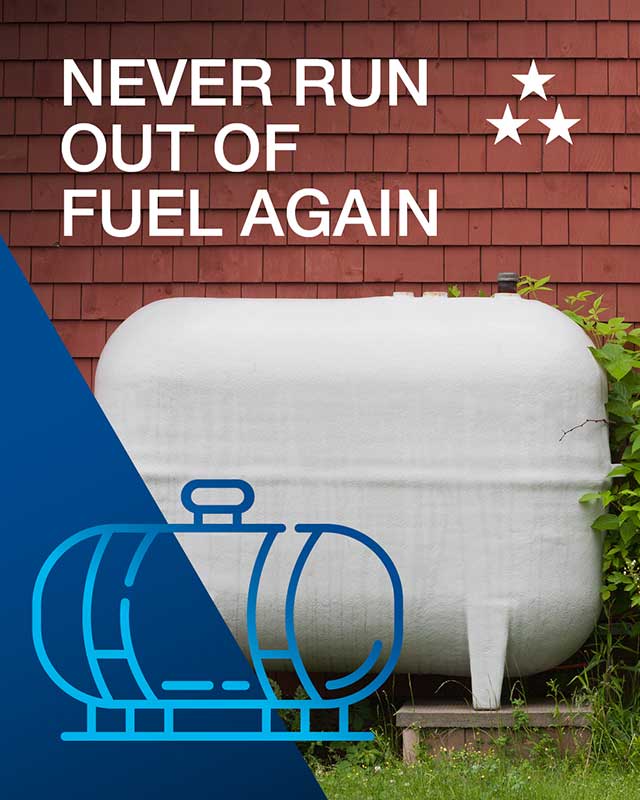
Mechanical float gauges are only reliable above 20%. Below that range, the reading stops being trustworthy – in the best case. In reality - below 20% operators are essentially blind. Even worse: powerful telemetry solutions lose their added value if the input is unreliable.
To compensate, propane marketers set their alarm thresholds high, typically around 20%, and refill tanks early to avoid run-outs. The math is uncomfortable when you stack it up:
And that is on a good day. On a bad day, the gauge is stuck. The end-consumer only finds out after he runs out of propane – usually on a weekend. What follows is an unexpected truck roll, a frustrated customer, and an operations team spending labor on diagnosing mechanical behavior instead of growing the business.
Manual gauges work, until they don't. And when they don't, you almost never find out at a convenient moment.
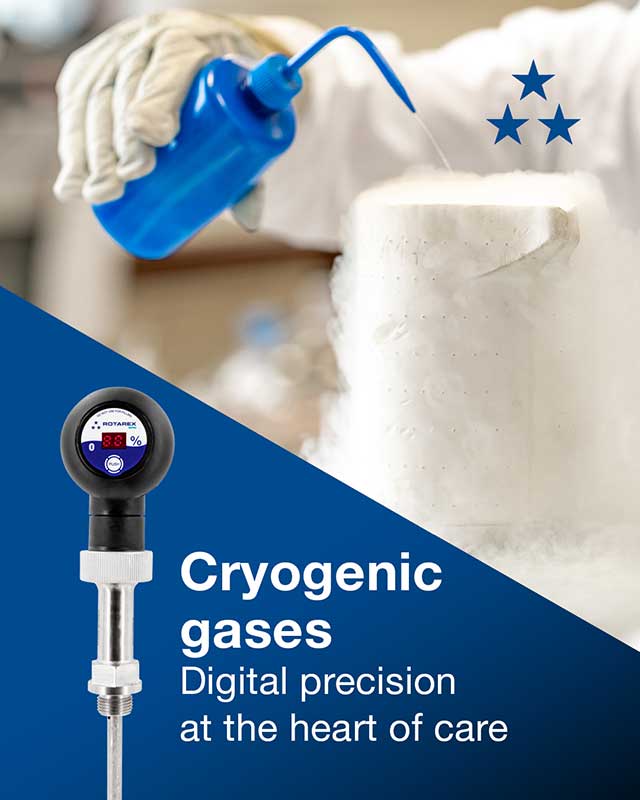
The Rotarex ELG C-Flex is a digital propane gauge that replaces the mechanical float entirely. It uses capacitance sensing, a technology Rotarex SRG has pioneered for liquefied gases since 1996.
Here is how it works, without the textbook.
The ELG has a flexible probe design with two electrodes. As the liquid propane level rises or falls, the electrical capacitance between those electrodes’ changes in a predictable way. The electronics measure that changes and converts it into a precise, readable level value.
That’s it. No float to stick. No arm to bend. No humidity captured within the dial. Just an electronic signal that reflects the real level inside the tank.
And because our probe is flexible, it absorbs the shocks and vibrations during transportation, even when tanks are shipped horizontally.

The technical headline is simple: 99% accuracy across the full scale, from empty to full, regardless of gas mixture or temperature.
But the real impact is operational. Here is what that looks like in practice.
The ELG is not a gadget bolted onto a tank. It is a structural upgrade to the way the tank reports its own status.
Of all the questions we get about the ELG, the most common is the simplest: how long does the battery last?
The official answer is: designed for a service life of up to 15 years.
But the real-world answer is more interesting. The low-power electronics inside the ELG are designed to draw only a tiny fraction of energy per measurement cycle. In practice, the battery can operate beyond the 15-year mark, depending on usage patterns and environmental conditions of course.
What happens if a replacement is needed? A new dial can be installed at any time by anyone. No setup routines, no calibration needed – just plug & play.
.jpg)
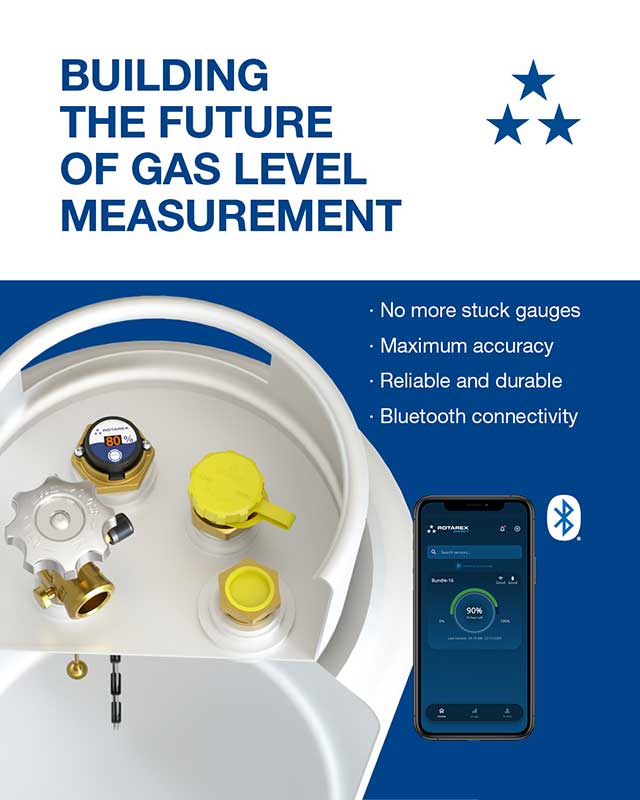
For end users, the ELG pairs with the Rotarex Connect mobile app via Bluetooth.
Open the app, see your gas level. Behind that simplicity, the app delivers:
No subscription. No monthly fee. No wiring. The end user downloads the app, scans for the ELG, and they are connected.
For the end customer it means peace of mind. No more walking outside in the dark to manually read a dial. No more emergency deliveries because nobody noticed the tank was low. No more guesswork.
For propane marketers with an existing telemetry fleet: it is as simple as it can get. The ELG connects automatically with all leading telemetry solutions!
Means any gateway able to receive a bluetooth signal, the ELG will provide the level.
Manual gauges do work, but they also fail unpredictably, get stuck in transit, give false readings at the levels that matter most, and create hidden costs in labor, troubleshooting, and customer disruption that rarely show up on a single invoice but absolutely show up in the annual P&L.
The conversation around digital gauges is not really about the component price. It is about the total operational cost of running a fleet of tanks that you cannot fully trust.
Digital reduces the hidden friction. It reduces post-delivery surprises. It reduces the calls that should not have to happen.
We are not selling digital technology for its own sake. We are selling:
No more stuck gauges. No more guesswork. No more wondering whether the dial is telling you the truth. A battery that runs for decades, an app that fits in a pocket, and a gauge built to outlast the tank itself.
Crank windows had a good run. So did mechanical floats.
It is time for the upgrade.