Jul 30, 2026
Why Digitizing Fuel Level Measurement Is a Game-Changer for Refined Fuel Users
Today, overfill prevention in LPG systems is taken for granted. Whether it involves cylinders, tanks, or mobile applications, the 80% fill limit is a well-established safety standard.
But it wasn’t always this way.
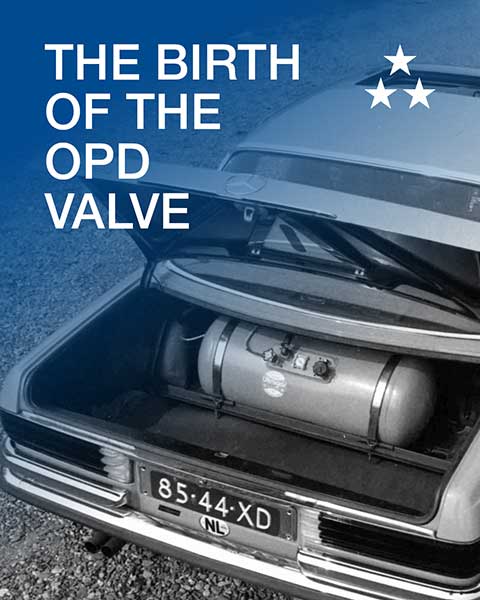
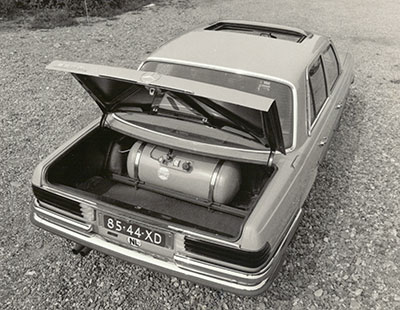
In the early days of Autogas LPG adoption, particularly in countries like the Netherlands, where LPG vehicles were widely used, refueling systems relied heavily on manual processes. Tanks were filled using filling connections, sometimes located directly inside vehicle trunks.
To prevent overfilling, systems included a fixed liquid level indicator, a small valve designed to release a small amount of liquid LPG when the tank reached approximately 80% capacity. At that point, the operator was expected to stop filling.
The system worked… but only if used correctly.
In practice, this approach had several major weaknesses:
First, it posed a significant risk of overfilling, sometimes reaching 90% or even full capacity, since it relied entirely on the operator. Safety signals could be overlooked or ignored, allowing the filling process to continue beyond the recommended limit.
This could lead to a substantial increase in internal pressure, creating serious safety hazards ranging from leaks to, in extreme cases, catastrophic failure.
As LPG usage grew, industry needed a solution that would eliminate uncertainty and reduce reliance on human intervention.
Recognizing this challenge, Rotarex took a decisive step forward.
Building on decades of expertise in gas control technologies, the company played a key role in developing and industrializing a new concept:
Automatic overfill prevention
The objective was simple, yet transformative: to ensure that Autogas LPG tanks could never be filled beyond a safe level, regardless of operator behavior.
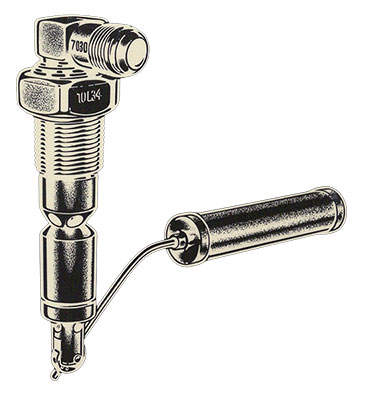
This led to the development of automatic shut-off mechanisms, capable of physically stopping the filling process at the 80% threshold.
In the early 1980s, this innovation evolved into what was soon known as the 80% fill-stop device.
The 80% fill-stop integrates a mechanical system that:
This marked a major milestone in LPG safety, transforming a manual process into an engineered safeguard.
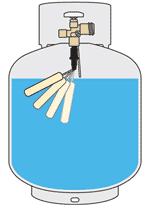
When the United States began experiencing a wave of serious accidents related to overfilling of cylinders in the 1990s, this Rotarex technology became a major regulatory and market topic in the late 1990s. The 1998 edition of NFPA 58 introduced specific overfill prevention requirements for many 4 to 40 lb propane cylinders.
The industry had to respond quickly. Rotarex’s true achievement was an industrial one: designing an overfill prevention device that could be mass-produced, was commercially viable, and was reliable enough to become an industry standard, thereby ensuring that cylinders could never be filled beyond a safe level, regardless of operator behavior. The birth of what is now known as the OPD valve. Key partners, including Manchester Tank and Worthington Enterprises, have played a vital role in spreading this innovation by integrating OPD technology into their cylinders and promoting its widespread adoption in the market.
From a simple idea in the early 1980s to a global safety standard, the OPD valve remains a powerful example of how Rotarex innovation has helped shape the compressed gases industry.
From the invention of LPG quick coupling systems decades ago, to the introduction of the OPD valve, Rotarex has continuously helped shape the LPG industry.
Each innovation addressed the same question:
How can we help to make our Industry not only safer but also more efficient.
Today, Rotarex is once again transforming the market.
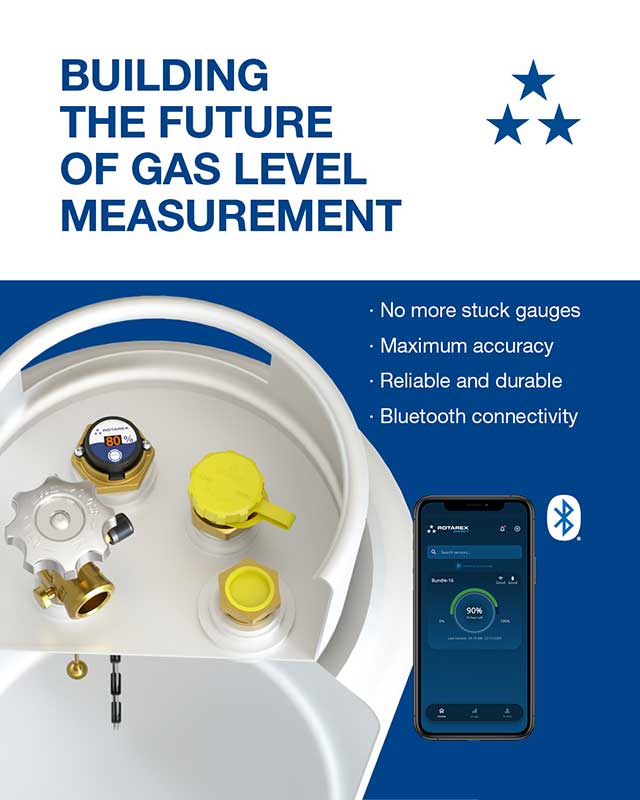
This time, through connected digital measurement solutions, bringing real-time visibility, smarter operations, and a new level of control/safety.
The future of gas is not just safe, it’s connected.